A reflection of the success of their grant project.
Project Overview
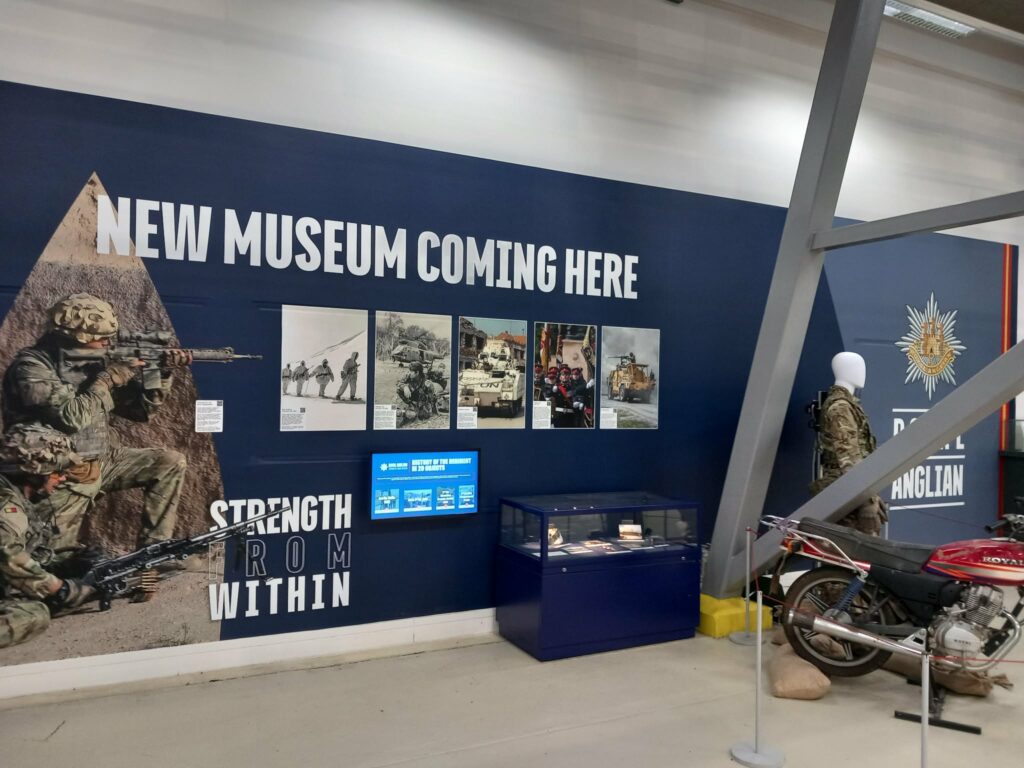
During a period of transition for the Royal Anglian Museum, the project Royal Anglian History in 25 Objects: Diversifying Access was developed to maintain public access to the Regiment’s collections. With the museum closing its existing premises in June and relocating to a small temporary space at Duxford, only a limited number of objects can be displayed physically. The absence of a permanent museum for several years made it essential to explore new ways of sharing the collection.
Thanks to a grant from the Army Museums Ogilby Trust (AMOT), this phase of the project was possible, enabling the museum to create a digital interactive showcasing key objects that would otherwise remain in storage. The installation provides an engaging and flexible way of presenting the Regiment’s history during the interim period and establishes a model for future use in the permanent museum.
Aims and Rationale
The project aimed to diversify access to the collection when traditional gallery display is restricted. Rather than replicating a conventional chronological exhibition, it presents a curated selection of objects that offer a snapshot of the Regiment’s history.
Objectives included:
The initial funded phase delivered an interactive featuring 20 objects, providing a foundation for future expansion.
Project Development and Delivery
Prior to this grant, the museum had digitised significant parts of the collection with the Regiment’s support. The AMOT grant enabled this work to be transformed into a public-facing interactive in collaboration with Infoaktif.
The installation allows visitors to browse 20 objects and learn about their historical and personal significance. The interactive is designed for simplicity, enabling museum staff to update content approximately every six months and ensuring the display remains dynamic and responsive.
Co-curation and Inclusive Practice
Co-curation is central to the project. Object selection is subjective, recognising that people with different experiences and backgrounds are drawn to different aspects of the collection.
Volunteers and community members contribute interpretations, providing alternative perspectives and enriching public understanding. The digital format also allows future contributors to programme content remotely, improving accessibility for those with mobility or health constraints.
Outcomes and Impact
The project has delivered clear benefits:
Expanded access: Visitors engage with a wider range of objects than physical displays allow.
Inclusive participation: Opportunities for co-curation are extended to a diverse group.
Richer interpretation: Personal perspectives add depth to the history presented.
Better use of reserve collections: Objects in storage are actively incorporated into interpretation.
Physical displays in the temporary space remain limited, but the digital interactive complements them by offering a broader historical snapshot.
Reflection and Future Development
From an external perspective, the project demonstrates how digital interpretation can address access challenges while broadening participation. Thanks to the AMOT grant, this first phase was successfully delivered, providing a flexible, sustainable digital resource. Future instalments will continue to involve new contributors, with the potential for remote co-curation growing as more of the collection is digitised. The project establishes a model that can be integrated into the new permanent museum when it opens.